Showing posts with label Waterfalls. Show all posts

Wednesday, December 20, 2017

Exploring the Erawan National Park


Arguably one of the most amazing waterfalls in Thailand is none other than 'Erawan' waterfalls. It is situated in the Kanchanaburi province, and located at a distance of approximately 70kms from the town of Kanchanaburi.

If you are a person who enjoys Nature and Adventure along with peace and tranquility, then a visit to the Erawan Falls is a must. Imagine a place with emerald pools, natural caves and dense forests mixed together, and that is Erawan for you !!

I had researched about this place before going to Thailand, and the images of Erawan inspired me to visit this place.

The Journey :

Early in the morning of 7th November 2017, Myself and my wife Manasa, headed towards the Kanchanaburi bus stand to board the local bus that departs to Erawan.
There are local buses that departs to Erawan from the Kanchanaburi bus terminal at an interval of every one hour, and the first bus departs at 8 AM.

Though the bus was crowded, we managed to get a seat. The journey was quite thrilling, as this was the first time we boarded a local bus in Thailand.

As and when the destination comes closer, the villages and agricultural fields slowly transform into a beautiful thick forest.

Erawan National Park


Erawan National Park is a 550 km2 park in western Thailand in the Tenasserim Hills of Kanchanaburi Province. Founded in 1975, it was Thailand's 12th National park.

81% of the park is mixed deciduous forests and the rest deciduous dipterocarp and dry evergreen forest. The park consists of limestone hills with elevation between 165-996m above the sea level, plains and number of streams. The major attraction of the park is Erawan Falls, a waterfall named after the Erawan, the three-headed white elephant of Hindu mythology. The seven-tiered falls are said to resemble the Erawan.


Erawan falls constitute of seven different tiers of waterfalls, and to access each tier, one has to trek along a well defined trail.
We purchased fruits and snacks along with few chocolates to help us retain energy for the whole day. 


The seven tiers of Erawan Waterfalls :


1) Lai Kuen Rung 


The first tier is named as 'Lai Kuen Rung', which is hardly a 100 metre walk from the main gate. The emerald ponds intrigue us to jump in to the water


For photography buffs, this place is tailor made.


2) Wang Macha


A further walk for about 150 metres will lead you to the second tier of waterfalls called 'Wang Macha'. I personally found this as the best of all the seven tiers. You can see lots of fish in these emerald pools, and the beauty of this falls is that you can sit behind the waterfalls. 


None of the Thai massages are equivalent to the massage you get at Erawan. To experience this, you have to just sit on a rock and let the water do its duty.


Along with this you also a get a Natural Fish spa / Fish Pedicure in the package :)


3) Pha Nam Tok 


Next comes the 'Pha Nam Tok', the third waterfalls which is around 1 kilometre from the entry, and about 250 metres from 'Wang Macha', the second tier.

This is a single tier water falls, that plunges from a height of around 30 feet.


The first image was captured from a DSLR, and the second one was with an iPhone 7 plus.

4) Oke Nang Phee Sue


About half a kilometre further, the fourth tier is seen. This is a small waterfalls, compared to the second and third tier.
A gradual ascent in the forest leads you to this serene place. This waterfalls is tranquil compared to the other ones. One can enjoy Nature and have a peaceful swim here.


5) Bue Nai Long


Next comes the Bue Nai Long, which is the fifth waterfalls in the Erawan National Park. The altitude starts to increase from here onwards, and the gradient of the terrain is a gradual ascent.  
The fifth waterfalls is almost 1.5 kilometres from the fourth waterfalls, and it takes approximately 30-40 mins to reach.


6) Dong Pruk Sa


Another 500 metres from the fifth water falls leads you to Dong Pruk Sa, which is the sixth waterfalls in the series. 
From the main trail, we have to take a deviation towards the right to visit this waterfalls. Once the stairs are climbed, one has to wade in the water for about 20-30 metres to reach the sixth tier.


7) Phu Pha Erawan


Return to the main trail from the sixth tier and take a deviation towards the left to reach the last tier of the Erawan falls. i.e, 'Phu Pha Erawan'


This is another half a kilometre trek from the sixth tier. Once we reached the top, we were extremely happy to have covered all the seven tiers of the Erawan falls and thereby witnessing the beauty of Nature in its raw form.

We were quite exhausted by then and started to unpack our bag to eat fruits. There were a lot of monkeys, and opening the bag without them noticing us was a herculean task.

We then traced back the steps to reach the main gate before the last bus departed. However, I could not resist swimming in this lovely pool. Hence, we returned to the second tier as quickly as possible.


After fulfilling my desire, we reached the entry point well before time, so that we could board the last bus.

Personally, this was one of the best place that we visited in Thailand, and I recommend nature lovers to visit this place. 

Tips to Travellers / Visitors


WHEN TO VISIT THE ERAWAN NATIONAL PARK

Duration: The hiking trail is fairly easy and takes about 1 hour one way to the top, without stops.
However a visit to the Erawan Falls National Park should not be rushed.
Many group tours visiting the falls rush in and out in about 2 hours. This is not enough time to enjoy the tranquil jungle setting. Forget about package tours and spend a whole day at the waterfall.

When: The Erawan National Park open gates at 7.30 am and officially close at 4.30pm.
The Erawan Falls gets busy on weekends. If possible it is best to visit the waterfall during the week. Arrive early in the morning and you’ll have the jungle to yourself.

HIKING TRAILS AT ERAWAN NATIONAL PARK

There are lot of birding trails in and around the park. If you are observant and lucky enough, you get to see lot of chirping beauties along with mammals like monkeys, langurs and Elephants.

CAVES
The Erawan National Park is also known to a number of caves. 

Phartat Cave
Ta Duang Cave
Mi Cave
Reua Cave
Wang Bah Dan Cave

Contact the information centre to visit these caves.

HOW TO GET FROM BANGKOK TO ERAWAN NATIONAL PARK

Stage 1: The first stage of getting from Bangkok to Erawan National Park is getting to Kanchanaburi. Unless you have your own private transport these are your options:

Train – Trains depart from Bangkok’s Thonburi train station at 7.50am and 1.55pm. The trip takes about 3 hours

Bus and  Minivan – This is the quickest way of getting from Bangkok to Kanchanaburi. Minivans regularly depart from Mochit bus terminal, and costs 120 THB per person

Stage 2: Kanchanaburi to Erawan National Park

Motorbike –  The ride takes about one hour and you have total freedom with time. Motorbikes can be rented for  300 THB per day in Kanchanaburi.

Bus – There is a dedicated bus operating from Kanchanaburi to Erawan National Park. Buses depart the Kanchanaburi Bus Station for the park almost hourly from 8am to 5pm. They also return to Kanchanaburi almost hourly. The public bus takes about 1 hour each way and costs 50 THB.

ENTRY FEE :

The entry fee collected by the Erawan National Park authorities is 300 THB for a foreign national, and 60 THB for a Thai National. 

ETHICS TO BE FOLLOWED :

1. Do not litter the place. It is protected very carefully and beautifully.
2. Do not shout, as it may disturb the fauna of the national park and other tourists as well.

Hope you enjoyed the blog. 
Thanks for viewing !!

Sunday, January 8, 2017

Rhapsody in Silver : Belligundi Waterfalls


Mr. Vishwanath of Summiters had informed me about this trek long time back, and I always wanted to do this trek considering the challenges it posed.
I could not join for this trek last year when he had organized one, but was lucky to join the trek this year.

Western Ghats are dotted with Pristine streams and waterfalls. In the dense forest are few waterfalls which are difficult to access due to uneven terrain. The rich Sharavathi Valley is home to numerous waterfalls and offer a feast to ardent nature lovers. Belligundi falls is also known as Kudumari waterfalls, and is one such waterfalls which offers challenge to anyone who is willing to explore it.

Day 1 : 23rd Dec, 2016

Things were planned and we were set to depart on 23rd Dec, 2016. As usual some of my friends cancelled their participation at the last moment, and this time I had to go alone with a new group. 

We decided to depart from Bangalore by 3.30 PM, but the hustle bustle of city traffic made us to hit the highway by 5.30 PM after picking up fellow trekkers.

After a small coffee break near Tumkur, we headed towards Shimoga. Enroute, we stopped at hotel Masala Suruchi (somewhere near Kadur) for dinner. The food was tasty and value for money. 


The dinner was so sumptuous and filling, that most of us fell fast asleep once we boarded the vehicle. 

We reached Shimoga by 11.30 PM and then proceeded towards Kattinakaru village which was our base for Belligundi trek.

We could make out the arrival of Western ghats by the breath of fresh air and cool breeze. The star studded sky was one of the most beautiful sights that I had seen in recent times. After losing our way and asking for proper directions, we managed to reach our home stay at Kattinakaru by 2.30 AM. 
The cold weather and the barking dogs welcomed us at Kattinakaru. We then met Mr. Goutham who was our host and discussed about the travel before hitting the bed. I was dreaming about the majestic waterfalls that we were going to see the next day.

Day 2 : 24th Dec, 2016


We were supposed to start our trek by 7.00 AM, but some of our fellow trekkers caused some delay due to which we hit the trail by 9.30 AM. 

The team :


 From L to R : Deeksha , Usha , Goutham (host) , Amit

From L to R : Tulsi (2 from left), Hari , Dinesh , Narayana (guide - 6th from left) , Ajay , Sridhar , Jyothi , Vishwanath , Goutham , myself


The starting point of the trek was around 10 kms from Goutam's home in Kattinakaru village. Once we reached the point, we started to trek without even looking back (as you know it was already late).


Our guide Narayana and his assistant Dhananjaya had brought packed lunch for us. The initial route was almost flat , except we had to cross small streams and a temple. The path was across the coarse of water which usually flows during monsoon months.


 Temple


This lesser known waterfalls is hidden deep inside the thick evergreen forests of the Western ghats in the Sharavathi valley. Its a sheer pleasure to trek in this less trodden region, that makes this trek more beautiful.


Rain shadow forests


The Sharavathi Valley:- The Sharavathi river valley nestled in the central Western Ghats, Shimoga district has been an ecological paradise. The Sharavathi River, rising at Ambuthirtha in Thirthahalli taluk flows north-west and drops down in the Ghats at the world famous Jog falls.


The Sharavathi Valley is home to many water falls and beautiful streams. The valley is evergreen to semi-evergreen forest along with moist deciduous type of forests that dominate the entire basin along with scrub savannah, grasslands, marshy areas . The plantation of acacia, cash crops like areca and rubber provides diverse options in the region.

It is also one of the topmost ecologocial hotspot in the Western ghats with varied flora and fauna.


After walking for almost one hour we arrived to a small place that has flowing water and is a small refreshing point (this place is called Kanchinakere). We quickly filled our water bottles before proceeding our trek. Our guide Narayana wanted us to reach the base of the waterfalls by 12.30PM, so that we could return back in time.


Each and every tree was extremely huge, that we had to trek in between the gigantic roots .

In my habitat

From this point onwards, the level of trek increases gradually from being moderate to difficult. The gradients continuously change from ascent and descent almost every few meters. 

The route from here to base of the falls is very thrilling, as we have to take the support of tree roots and balance between slippery rocks while descending. The descent was very challenging, and many people started to fall every few meters. We then reached the water stream by around 12.30 PM. Most of them were completely drained of energy at this point, and this was where we got the first glimpse of the mighty falls.


First glimpse of the Belligundi falls

To have a glimpse of this waterfalls and to feel the presence of its magnificence, one has to trudge through the unbeaten path. For an ardent trekker to reach the bottom of the falls, he has to cross the intermittent streams, wading through grass, shredding of blood to hungry leeches & descending and ascending multiple emerald slopes. 


Walking through the canopy and listening to the sounds of chirping birds makes the hike memorable. The sight of the silver line of this roaring waterfalls through the canopy that is cascading from height of 600 ft brings a pinch of curiosity in you.


Once the shola forests end, one has to trek further around 1-2 kms to the right thereby crossing small streams and rock boulders. This takes you to the base of the falls from where you can have a refreshing bath in the lap of Nature.


However, few people could not proceed post this point due to the difficulty in terrain and physical stress.
It took around 30 mins for the rest of us to reach the base of the waterfalls. 

The sight from the base of the waterfalls was breathtaking and spellbinding. The thick forests of the Sharavathi valley could be seen from here. 


There was a beautiful rainbow that was formed at the base and this made our bath more colorful. Without even looking back most of us took bath near the rainbow and this was extremely refreshing and rejuvenating.


Taking a refreshing bath under the sprinkling water, a natural shower with a vibgyor of colors removes the hardship and rejuvenates the body, mind and 
soul..!  

All our physical sorrows were vanished by taking a refreshing bath in the Sharavathi river. It was a real Natural therapy treatment for all of us.


Water drops as seen from the Rainbow

This feeling cannot be explained, but has to be experienced.

After the bath, we all gathered near the rock for lunch. The lunch comprised of Chapathis , Chutney , and Gojju (a local delicacy). Trust me this was one of the best lunch we had and the chutney was truly lip smacking.

We started to trek back by 3.30 PM and hoped to reach the starting point before sunset. However, our calculations went wrong, as the darkness engulfed in no time. All of us were really tired with the ascent due to which the water bottles ran empty within a short span. We were gasping for breath and waiting to reach Kanchinakere, so that we could fill our bottles again. 

Trekking in the darkness was a first time experience for me, and it was a unique experience. It was good that we anticipated darkness and brought torches before hand.

Atlast we reached the Kanchinakere water source by around 6.45 PM, and the group prepared fresh Nimbehannu Panka (Lime juice). It was like finding an oasis in the desert, as it brought back all the energy within us.

From this point it took another 2 hours for us to reach the starting point where the tempo driver was waiting for us. We finally reached the starting point by 9.00 PM, thus marking an end to this amazing trek which was totally surprising , exciting and thrilling. 

We reached the homestay at Kattinakaru by around 9.30 PM, and soon most of us hit the bed to earn a well deserving sleep after having delicious Malnad dinner.

The homestay decorated with lanterns 


Day 3 : 25th Dec, 2016

I took a small stroll around the house to have a glimpse at the surroundings.

Homestay

Arecanut plantations

After the morning rituals and breakfast, we bid goodbye to Goutham and his family and thanked them for the amazing hospitality they showered on us.

While driving back to Bangalore, we had a quick visit to Jog falls only to be disappointed by the water level in there. It was truly dis-heartening to see Jog falls without water.

Just a comparison 
(The first picture was photographed during Aug 2007, whereas the second one was during this visit)

Tips for trekkers

1. Smoking and Drinking is strictly prohibited
2. Permits and Guide is necessary
3. Usage of plastic is banned
4. Avoid trekking in Monsoon season (lots of leeches and riskier to trek)
5. Best time is Oct to Jan
6. No mobile signals except BSNL at Kattinakaru
7. Water bottles and Energy bars are recommended
8. Trek level : Moderate to Difficult
9. Do not mess with wildlife if at all you encounter any.
10. Leeches are abundant during monsoons and the frequency reduces thereafter.
11. Carry powerful torches
12. It takes almost 10-12 hours to trek (up and down)
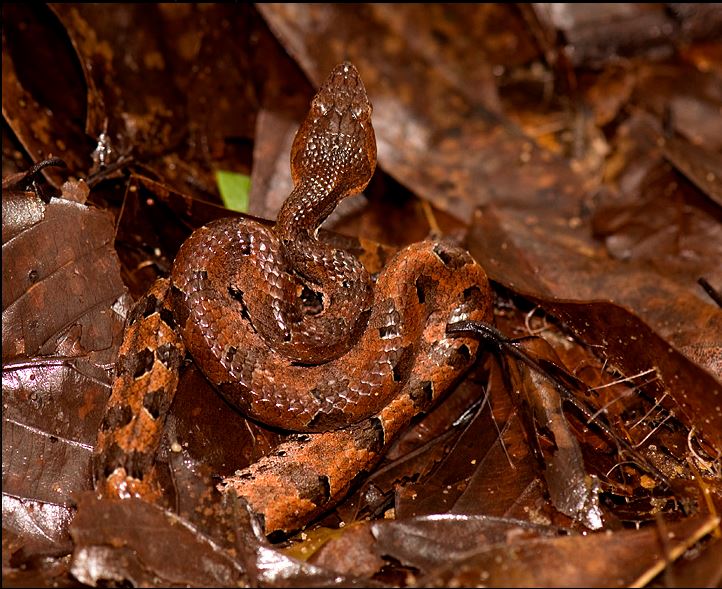
13. Snakes like Vipers , vine snakes , Cobras(Spectacled and King) , Rat snakes are common. Best advise is to leave it as it is if you encounter with any snake. Be very careful & do not harm them in any way.

How to react in case of Snake bite ? see this blog

Green vine snake


Snake images were photographed during my previous trip to Western ghats. You can see that blog here

Route :

Bangalore - Tumkur - Arsikere - Shimoga - Sagar - Talaguppa - Kargal - Kattinakaru

Belligundi falls as seen from a distant view point

Picture courtesy : Vishwanath
(Note : This was not photographed during this trip)

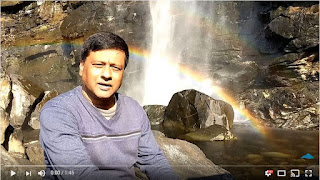
Our fellow trekker Mr. Dinesh has shared his experiences of trekking to Belligundi falls. Please see this short video here :


To know the grandeur of Jog falls during monsoons, see this short video :


If you are interested in this trek, then please contact :

Mr. Vishwanath
(Summiters Adventures)
+91 97403 60365


Thank you


Subscribe via email

Please subscribe to get regular updates from my blog ...

Enter your email address:

Delivered by FeedBurner